
Pasteur’s Anthrax Disaster
The failure of vaccination.

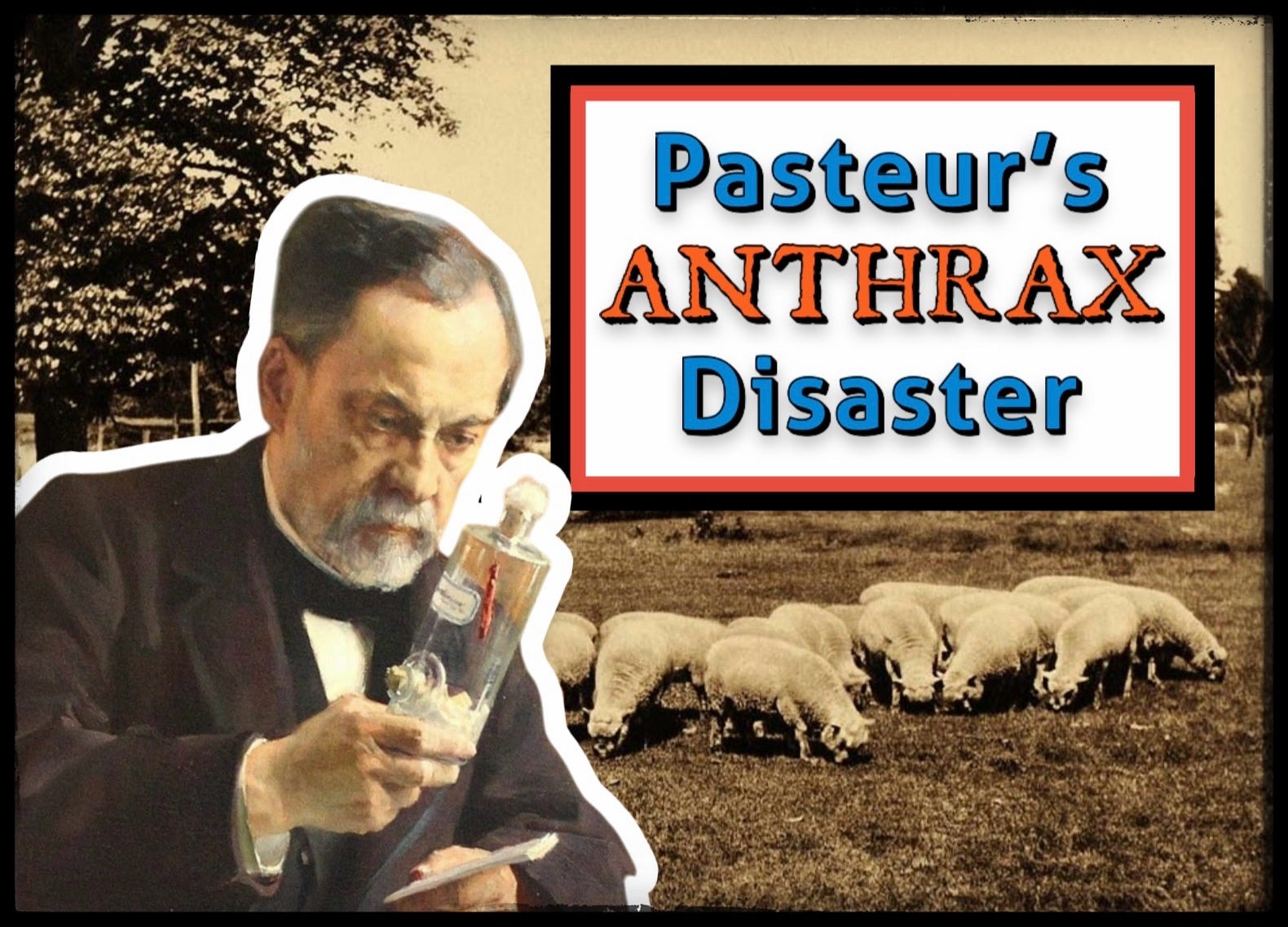
In the early 1880s, Louis Pasteur released a vaccine for anthrax, a disease which primarily afflicts livestock.
However, evidence soon began to mount concerning the inefficacy and dangers of the inoculations.
In 1882, the Turin Veterinary School of Italy performed an experiment to test Pasteurs alleged prophylactic. But the experiment was an “extraordinary fiasco”, as described in Pasteur’s biography, The Life of Pasteur. All the sheep, vaccinated and unvaccinated, had died due to the inoculation of the blood of a sheep which had died of anthrax—thus disproving the claims of immunity from vaccination.
“A year before this (Peter had not failed to report the fact) an experiment of anthrax vaccination had completely failed at the Turin Veterinary School. All the sheep, vaccinated and non-vaccinated, had succumbed subsequently to the inoculation of the blood of a sheep which had died of charbon [anthrax]. This took place in March, 1882.”
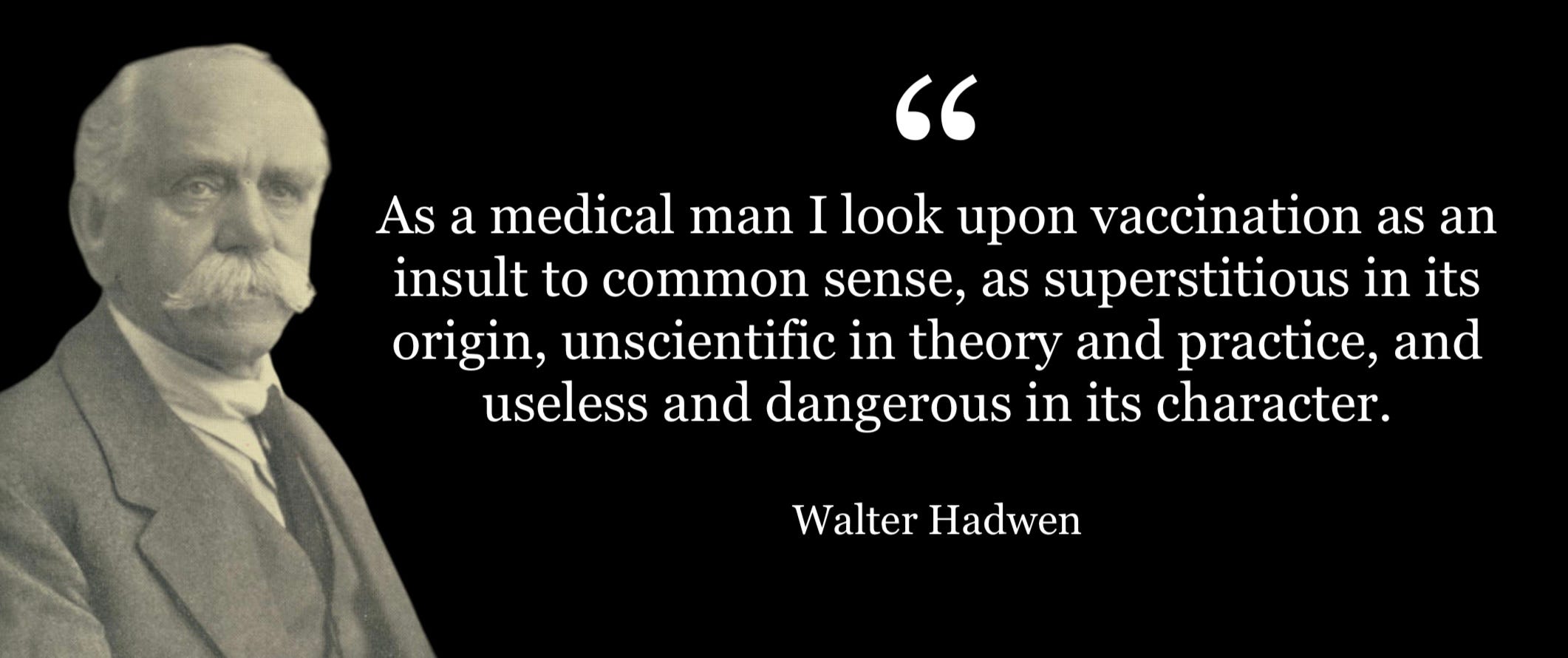
Dr. Michel Peter, French physician and member of the Académie de Médecine, was a fierce critic. He accused Pasteur of creating diseases like anthrax and rabies through the very vaccines meant to prevent them. In the book Pasteur and Rabies, he outlines a notable example; in 1888, 4,564 sheep were vaccinated against anthrax in Southern Russia, of which 3,696 died—a percentage of 81.
“Inoculation as preventive of charbon [anthrax] was practised upon 4,564 sheep at Kachowka, in Southern Russia, of which 3,696 died. M. Bardach, in August, 1888, inoculated 4,564, of which only nineteen per cent. survived. This is called protective inoculation! The promotor of this gigantic holocaust was M. Meczikow, a doctor of philosophy, director of the Bacteriological Institute of Odessa.”
As such, the fiasco in Italy was not an isolated example, as noted by E. Douglas Hume in her book Bechamp or Pasteur?
“Thus the Turin disaster is shown to have been by no means an isolated example.”
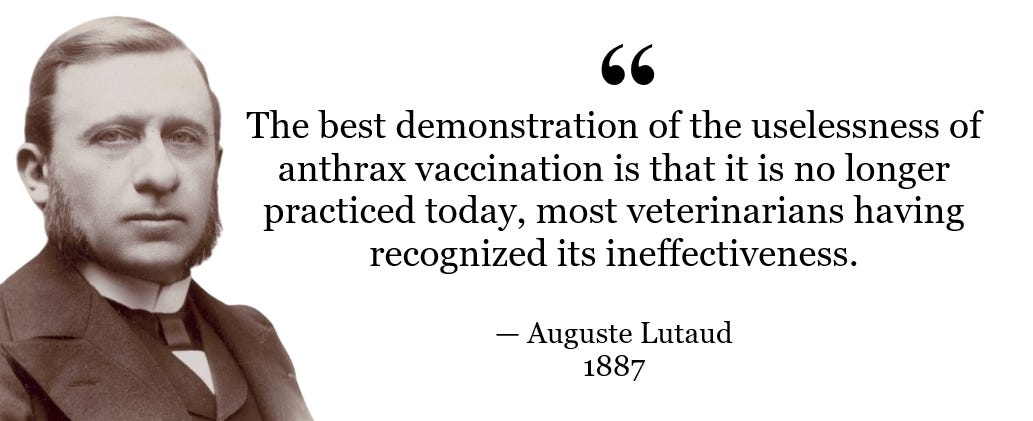
Numerous examples of the failure of vaccination were provided in a 1891 issue of The Times and Register. These instances were translated from the work of Auguste Lutaud, one of the most virulent opponents of Louis Pasteur, in his work Studies on Rabies and the Pasteur Method (Études sur la rage et la méthode Pasteur).
“With regard to the vaccine of splenic fever (charbon) [anthrax] … they have gone out of vogue, and are not practised to-day, the majority of veterinary surgeons having recognized their inefficacy. The following facts borrowed from Lutaud will seem startling to those who have read only one side of this question:
On a farm in the suburbs of Laon, the proprietors caused to be vaccinated three times, with a fortnight of interval, a flock of sheep affected with charbon, but the disease went on unchecked.
On a neighboring farm, the veterinary vaccinated the horses which were not sick, and three perished from the operation; M. Magnier, the proprietor, demanded reimbursement for the price of the horses, and obtained it.
In the suburbs of Meaux, a veterinary physician having killed four cows with the famous vaccine, M. Pasteur paid the price of the cows to stop a law suit.
In 1882, M. Franchamp, a farmer of Chateauneuf, lost in consequence of the anthracoid vaccinatious, horses, cattle and sheep to the value of five thousand francs.
In 1882, M. Fournier, a veterinary of Augerville (Loiret), vaccinated a flock of four hundred sheep; a few days after the application of the first vaccine ninety sheep succumbed to splenic fever.
In 1884, Henri Thirouin, Mayor of St. Germain-le-Gaillard, and Marcel Lebrun, a farmer in the same commune, had their sheep vaccinated by Pasteur’s method; a considerable part of their flocks died as the result of the vaccination.
A similar fatality occurred in 1888 in a Russian commune from the Pasteurian vaccinations, as reported in the Semaine Medicale of that year; the proprietors of several large estates caused their cattle, sheep and horses to be vaccinated to protect them against an epidemic which was raging in the surrounding country, and lost a large part of their flocks from the inoculated disease.
The Sanitary Commission of the Hungarian Government in 1881 thus terminated its report on the inoculation of cattle according to Pasteur’s method:
“The most grave diseases, pneumonia, catarrhal fevers, etc., have smitten exclusively the animals subjected to vaccination. It follows from this that the Pasteurian inoculation tends to accelerate the action of certain latent diseases, and to hasten the mortal issue of other grave affections.”’
The Hungarian government then and thereafter prohibited these inoculations.”
“To those who wish to study Pasteur as a man—a monster and a fraud—we cheerfully commend the work of our friend Lutaud—a French journalist.”
The Hungarian government was not alone in denouncing Pasteur’s anthrax vaccine; the Fourth Annual Report of the American Anti-Vivisection Society stated that the German and British governments also condemned the vaccine.
“But Dr. Hughes errs in supposing that his researches as to anthrax or splenic fever have ever been of any value ; the Hungarian, German, and English Government Commissions appointed to enquire into this subject have unanimously condemned his system of inoculation for these diseases.”
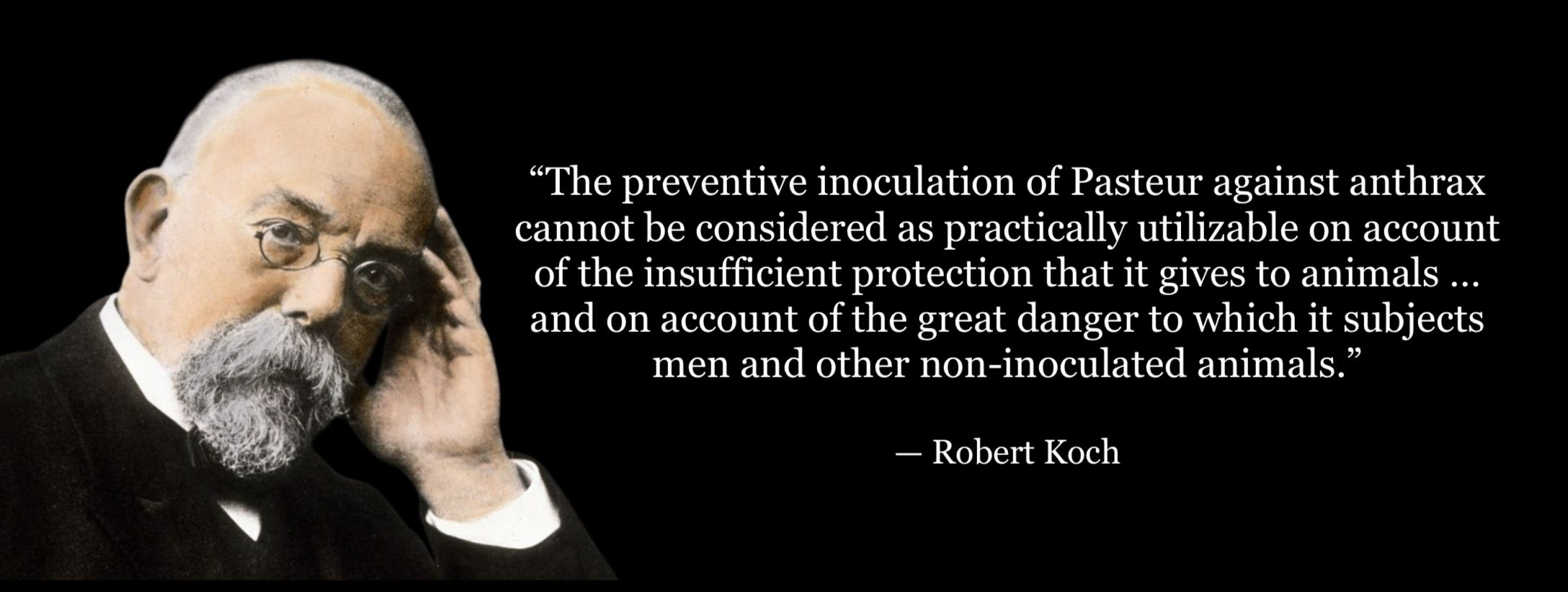
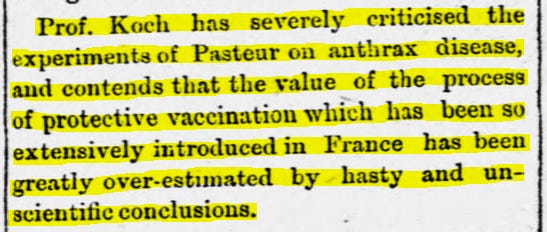
Even Robert Koch, renowned bacteriologist, criticized Pasteur’s vaccine on account of its inefficacy and danger.
“The preventive inoculation of Pasteur against splenic fever [anthrax] cannot be considered as practically utilizable on account of the insufficient protection that it gives to animals against natural infection, on account of the short duration of that protection, and on account of the great danger to which it subjects men and other non-inoculated animals.”
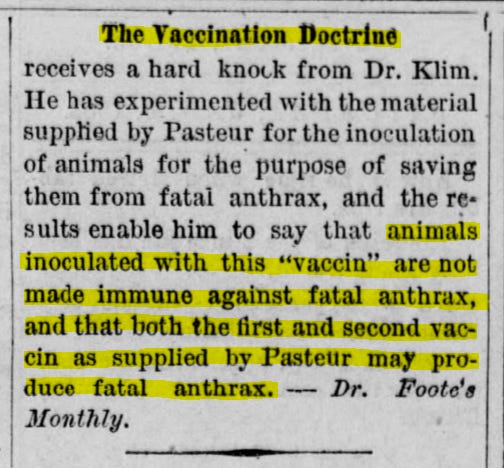
“It is now a fact current that inoculation against charbon [anthrax] has gone out of date, the general impression being not only that it is not permanently of value, but that it is even dangerous and destructive. The outcome in chicken cholera and the rouget of pigs has been about the same.”
In a publication presented at the Sixty-second Annual Meeting of the American Veterinary Medical Association in 1925, A. Eichhorn describes how Pasteur’s anthrax vaccine frequently failed to protect animals from the disease.
“A closer analysis reveals that in certain notorious anthrax districts, the vaccination frequently failed to produce in the animals a sufficient resistance against the natural exposure.”

Pasteur’s Rabies Deception

Louis Pasteur’s rabies investigation began in the late 1800s. However, his initial attempts to establish the etiology of rabies were unsuccessful, as described by the Pasteur Institute.

Robert Koch's Tuberculin Disaster

In 1890, Robert Koch presented a paper entitled On Bacteriological Research to the International Medical Congress, in which he declared that he had developed a substance that hindered the growth of tubercle bacilli.
Anthrax, Arsenic and Old Lace
https://www.westonaprice.org/health-topics/anthrax-arsenic-and-old-lace
Don't worry, vaccination is now 100% safe and effective, so sayeth the new monsters of medicine.
Thanks! There's much in your post that I haven't come across before and it's greatly appreciated.